
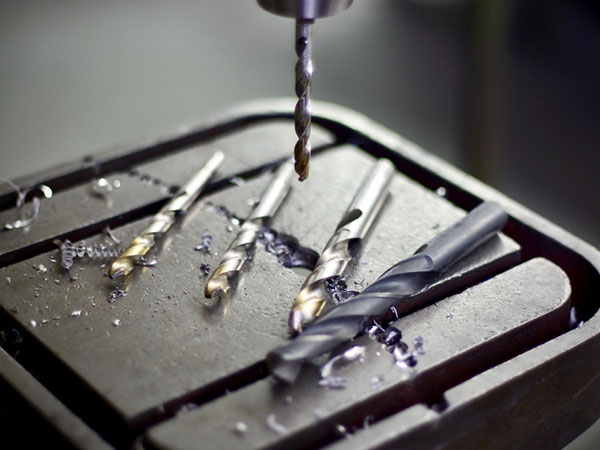
Tungsten Carbide vs. High-Speed Steel Drill Bits: A Selection Guide
In modern metalworking, the choice of drill bit material directly impacts both production efficiency and machining quality. As two of the most widely used materials, tungsten carbide (WC) and high-speed steel (HSS) often leave users uncertain about the best choice. This article draws on materials science principles and industrial test data to systematically analyze their intrinsic properties and application boundaries. By comparing key indicators such as hardness retention, thermal stability, and cost-efficiency, it offers practical selection strategies for various working conditions. Special solutions are provided for challenging scenarios such as composite material machining and interrupted cutting, helping technicians avoid selection pitfalls and build a scientific understanding of tool management.


| Temperature Range | Tungsten Carbide Performance | High-Speed Steel Performance |
|---|---|---|
| 20–300°C | Stable | Optimal working condition |
| 300–500°C | Starts oxidizing (needs coating) | Hardness drops ~15% |
| >500°C | Possible cobalt phase loss | Complete failure |
Case: Automotive Component – Stainless Steel Flange (10mm Hole Depth)
| Material Type | WC Suitability ★ | HSS Suitability ★ | Notes |
|---|---|---|---|
| 304 Stainless Steel | ★★★★★ | ★★☆ | Use WC with >10% cobalt content |
| 6061 Aluminum Alloy | ★☆☆ | ★★★★★ | Choose HSS with large helix angle |
| Fiberglass Board | ★★★★☆ | ☆☆☆☆☆ | WC with diamond coating is essential |
| Medium Carbon Steel | ★★★☆ | ★★★★☆ | HSS offers better cost-effectiveness |
Top 3 reasons:
Solutions:
Selecting the right drill bit material is all about balancing machining factors with precision. Tungsten carbide offers superior hardness and heat resistance, dominating in continuous machining of hard materials. High-speed steel, on the other hand, provides excellent toughness and economic value, thriving in mixed or unstable environments.
To make a wise choice, consider material characteristics, equipment precision, and production volume—and beware of relying solely on "hardness" or "cost" as deciding factors. As coating technologies and hybrid materials evolve, the performance boundaries between WC and HSS are being redefined. Only by adopting a dynamic evaluation mindset can you fully unlock the potential of your tooling strategy—and find the sweet spot where efficiency meets cost control.
 We like to do design according to all the customers' requirements, or offer them our new designs. With strong OEM/ODM capabilities, we can fill your sourcing demands.